Culture & context
About this dish
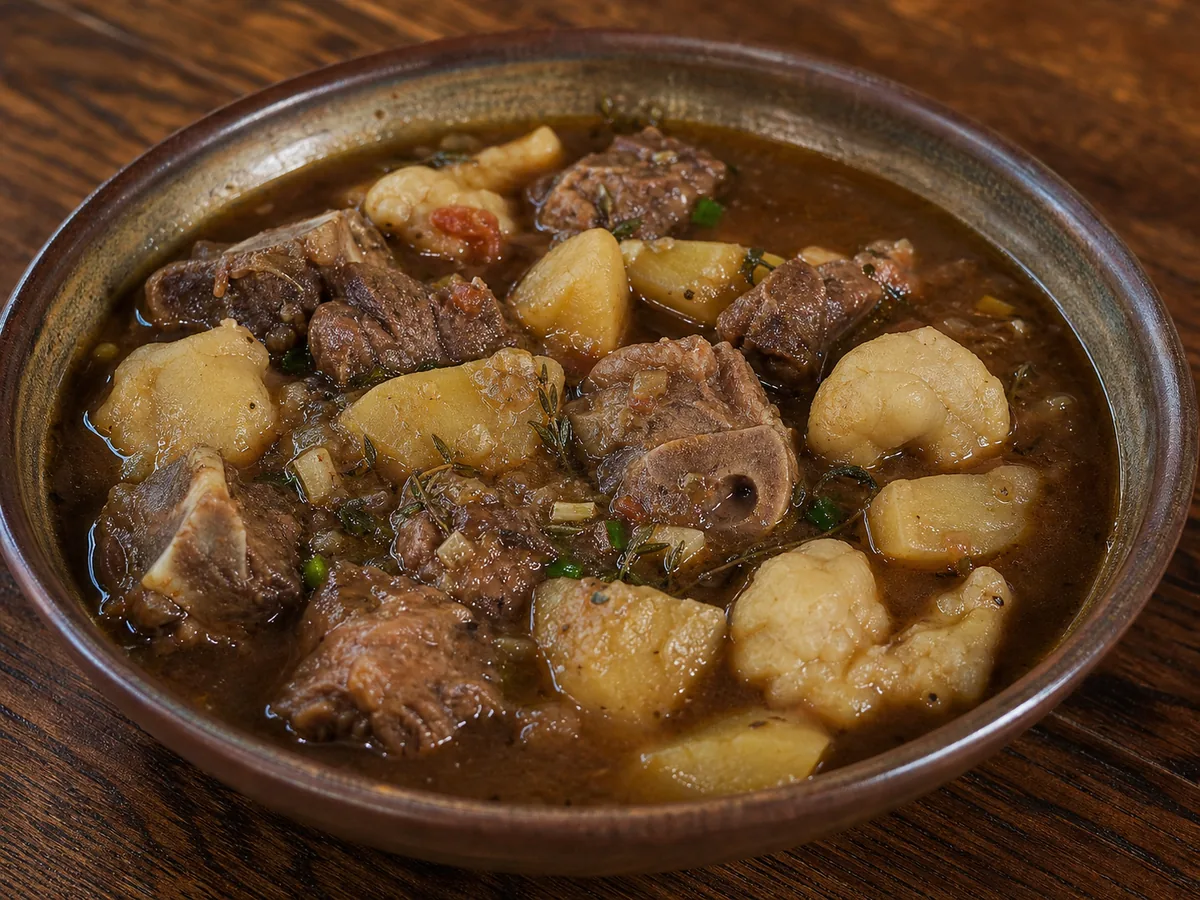
Goat water is one of Saint Kitts and Nevis’s best-known traditional stews. It shares a name and regional history with Montserrat’s celebrated goat water, while local versions add provisions and dumplings.
National-dish status: Iconic national dish association; sources differ on an official designation
Country flag: 🇰🇳
- Despite the name, goat water is a substantial stew or soup.
- Recipes may include a small splash of rum, identified as optional rather than required.
Food-safety note
Cook goat until fully tender and inspect servings for bone fragments. Keep hot pepper whole and use stable heat under the large pot.
Equipment needed
- Large mixing bowl
- Chef’s knife and cutting board
- Measuring cups and spoons
- Heavy pot, skillet or baking dish
- Wooden spoon or spatula
- Instant-read thermometer
Ingredients
- 1.8 kg (4 lb) bone-in goat, cut up
- 2 tablespoons oil
- 2 onions, chopped
- 5 cloves garlic
- 4 scallions
- 5 sprigs thyme
- 1 teaspoon ground pimento
- ½ teaspoon cloves
- 1 teaspoon black pepper
- 2 tablespoons tomato paste
- 400 g breadfruit, cubed
- 1 small green pawpaw, cubed
- 1 whole Scotch bonnet
- 2.5 litres water
- 180 g flour dumpling dough
Before the heat
Preparation steps
- Set upRead the full method, measure the ingredients and prepare the equipment before applying heat.
- Work safelyCook goat until fully tender and inspect servings for bone fragments. Keep hot pepper whole and use stable heat under the large pot.
At the stove
Cooking instructions
- Season goatSeason goat with onion, garlic, scallion, thyme, pimento, cloves and pepper; rest at least 1 hour.
- BrownHeat oil in a heavy pot, brown goat in batches, then cook tomato paste for 1 minute.
- SimmerAdd seasonings and water, bring to a boil, skim, then simmer 1½–2 hours.
- Add provisionsAdd breadfruit, green pawpaw and whole Scotch bonnet; simmer 25 minutes.
- Add dumplingsShape small droppers, add and cook 20 minutes until goat and dumplings are tender. Remove pepper and bones that have loosened.
Working timeline
- 0:00–35 minutes: Preparation
- Next 2 hours 30 minutes: Cook using the numbered method
- Final 10 minutes: Check doneness, rest where required and prepare accompaniments
Times are practical estimates. Ingredient size, cookware and heat level can change the finish time.
Chef’s tips
- Measure ingredients before starting; Caribbean one-pot methods often move quickly once the heat is on.
- Keep Scotch bonnet whole when you want aroma with less heat.
- Taste preserved ingredients after soaking or pre-boiling before adding salt.
Common mistakes
- Crowding the pan or pot and losing control of the cooking temperature.
- Adding all salt before preserved ingredients have been tasted.
- Rushing the resting, tenderising or cooling stage described in the method.
What to serve with it
- Crusty bread
- White rice
- Boiled provisions
Storage & reheating
Cool promptly and refrigerate in a covered container for up to 3–4 days. Reheat thoroughly; seafood and poultry should reach 74°C / 165°F.
Recipe sources
This recipe and cultural note were checked against multiple culinary and tourism references. Family methods may vary.
Editorial note
Caribbean households and cooks may season or finish this dish differently. This LimeGrid version is a practical starting method, not a claim that every family recipe should be identical. Reviewed 2026-07-18.