Culture & context
About this dish
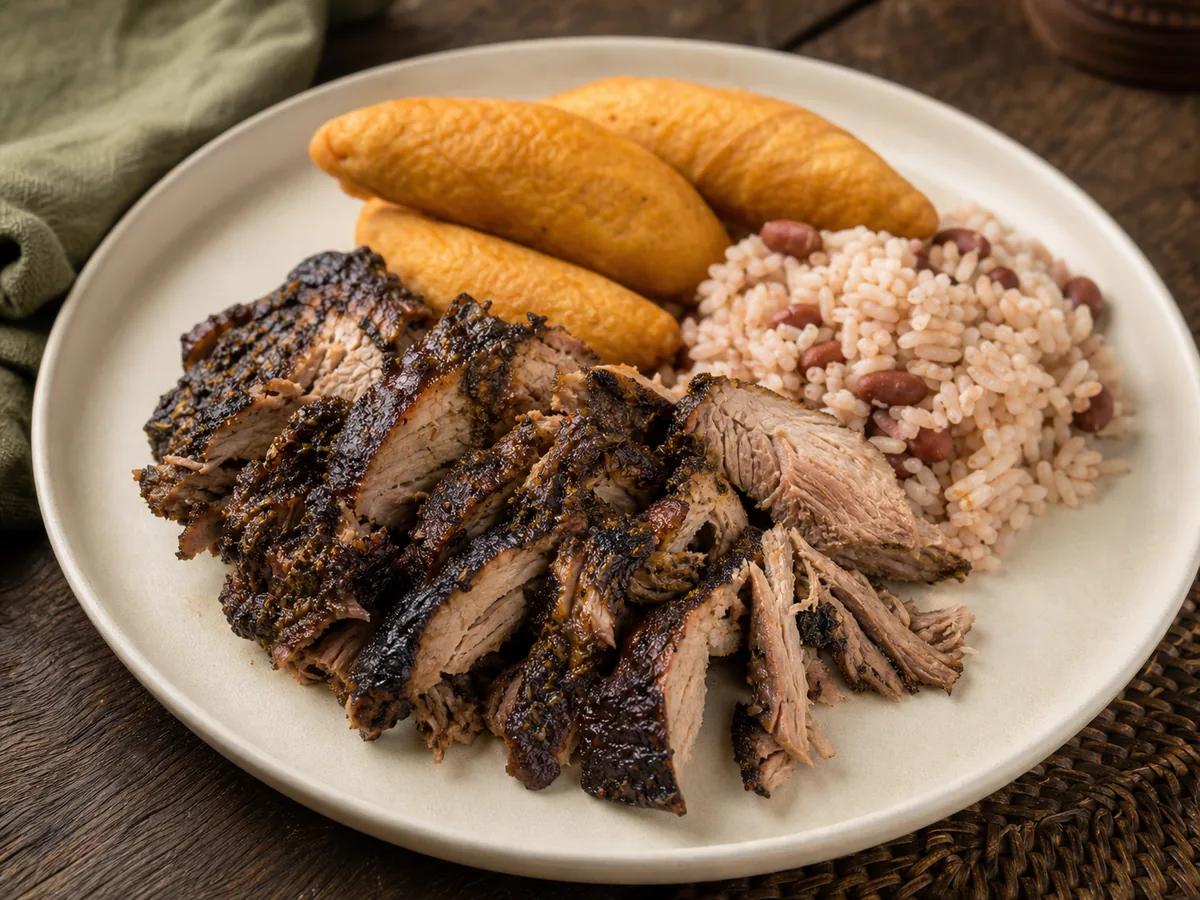
Jerk developed in Jamaica through Indigenous Taíno and Maroon knowledge. Pork is the meat most closely associated with the older method, traditionally cooked slowly over pimento wood.
Did you know? Traditional jerk develops flavour from seasoning, smoke and time; the final char is important, but it should come after the pork has cooked gently and become tender.
Food-safety note
Keep raw pork and marinade away from ready-to-eat food. If marinade is used for basting, boil it first. Confirm temperature in the thickest pieces.
Equipment needed
- Blender or food processor
- Non-reactive marinating container
- Charcoal grill with indirect-heat area or covered roasting pan
- Tongs
- Basting brush
- Instant-read or probe thermometer
- Cutting board and heavy knife
Ingredients
- 2.3 kg (5 lb) boneless pork shoulder, cut into large slabs
- 8 scallions, chopped
- 1 medium onion, chopped
- 6 cloves garlic
- 2–3 Scotch bonnet peppers
- 2 tablespoons fresh thyme leaves
- 2 tablespoons ground pimento (allspice)
- 1 teaspoon grated nutmeg
- 2 tablespoons brown sugar
- 2 teaspoons salt
- 1 teaspoon black pepper
- 60 ml (¼ cup) cane vinegar
- 60 ml (¼ cup) soy sauce
- 2 tablespoons vegetable oil
Before the heat
Preparation steps
- Blend a coarse paste Keep a little texture in the scallion, thyme and spices rather than turning the seasoning watery.
- Score and season Make shallow cuts so the paste reaches more surface area without cutting the pork into small pieces.
- Plan two heat zones Set up low indirect heat for cooking and a moderate direct area for the final colour.
At the stove
Cooking instructions
- Blend the jerk pasteBlend scallion, onion, garlic, Scotch bonnet, thyme, pimento, nutmeg, sugar, salt, pepper, vinegar, soy sauce and oil to a coarse paste.
- Season and marinateScore the pork lightly, rub paste into every surface, cover and refrigerate 8–24 hours.
- Cook low and coveredCook over indirect charcoal heat at 150–165°C / 300–330°F, preferably with pimento wood, or in a covered 160°C / 325°F oven for about 2 hours.
- Finish over direct heatUncover and brown over moderate direct heat, turning and basting, until the edges char and the thickest pieces reach at least 63°C / 145°F; shoulder is more tender near 88–93°C / 190–200°F.
- Rest and chopRest 15 minutes, chop into bite-size pieces and serve with the resting juices.
Working timeline
- Day before: Blend seasoning, rub the pork and refrigerate 8–24 hours
- 0:00–2:00 hours: Cook slowly over indirect heat or in a covered oven
- 2:00–2:25 hours: Uncover or move over moderate direct heat for charred edges
- Final 15 minutes: Rest before chopping
Chef’s tips
- Keep the long cooking stage over indirect heat so the shoulder cooks steadily.
- The blended jerk paste contains sugar and aromatics; use moderate heat for the final browning so they colour without burning.
- Pimento wood can add a traditional smoke when safely and legally available, but it is optional; the covered-oven method remains an alternative.
Common mistakes
- Using marinade for basting after it has touched raw pork; reserve a clean portion before it contacts the meat, or boil used marinade before basting.
- Stopping shoulder at the minimum safe temperature and expecting it to be tender; the method gives 88–93°C / 190–200°F as a higher tenderness target, while retaining the validated minimum temperature and rest guidance.
- Chopping immediately; rest the pork for 15 minutes first.
What to serve with it
- Festival
- Hard dough bread
- Roast breadfruit
- Rice and peas
Storage & reheating
Refrigerate within 2 hours for up to 4 days. Reheat covered to 74°C / 165°F.
Recipe sources
References consulted for this recipe:
Editorial note
Reviewed for Jamaican context by James Dunn, LimeGrid founder — Jamaica.